Join Joe Berk as he discusses the Deer Park Winery and Auto Museum and the many cars and bikes it features.
The Skinny
- What: Deer Park Winery and Auto Museum, 29013 Champagne Boulevard, Escondido, California 92026. Phone 760-749-1666. Open Thursday through Monday from 10 a.m. to 5 p.m. Admission is $14; senior and military discounts available.
- How to Get There: Located just off Interstate Highway 15, approximately 40 miles north of San Diego. Exit I-15 at Gopher Canyon Road and then take Champagne Boulevard south.
- Best Kept Secret: They Don’t Make ‘Em Like That Anymore, by Robert Knapp and Dan Burger, no longer in print but still available in the Deer Park Winery and Museum gift shop.
- Avoid: Touching the cars, and sampling too much wine before riding off to explore the region’s many beautiful roads.
- Don’t Miss: The restored 1953 Cadillac, the vintage Harley and Indians, and riding California’s 70-series roads.
- More Photos: Exhaust Notes Blog
- More Info: DeerParkMuseum.com
Deer Park Winery and Auto Museum
If there’s such a thing as a barn-find museum, the Deer Park Winery and Auto Museum is it. I am always on the prowl for suitable destinations, preferably museums with motorcycles, and I was pleasantly surprised when I unexpectedly found the Deer Park Winery and Auto Museum in Escondido’s Peninsular Range mountains. It is literally next door to the Lawrence Welk Resort (about 40 miles north of San Diego and 80 miles south of Los Angeles).
The Deer Park Winery and Auto Museum consists of three buildings on a 15-acre vineyard. It features more than a hundred classic convertibles, neon signs, bicycles, Coca-Cola artifacts, Barbie dolls, vintage radios, televisions, washing machines, typewriters, and other antique appliances. The three buildings are surrounded by the vineyard, and various convertibles awaiting restoration are scattered throughout the grounds.
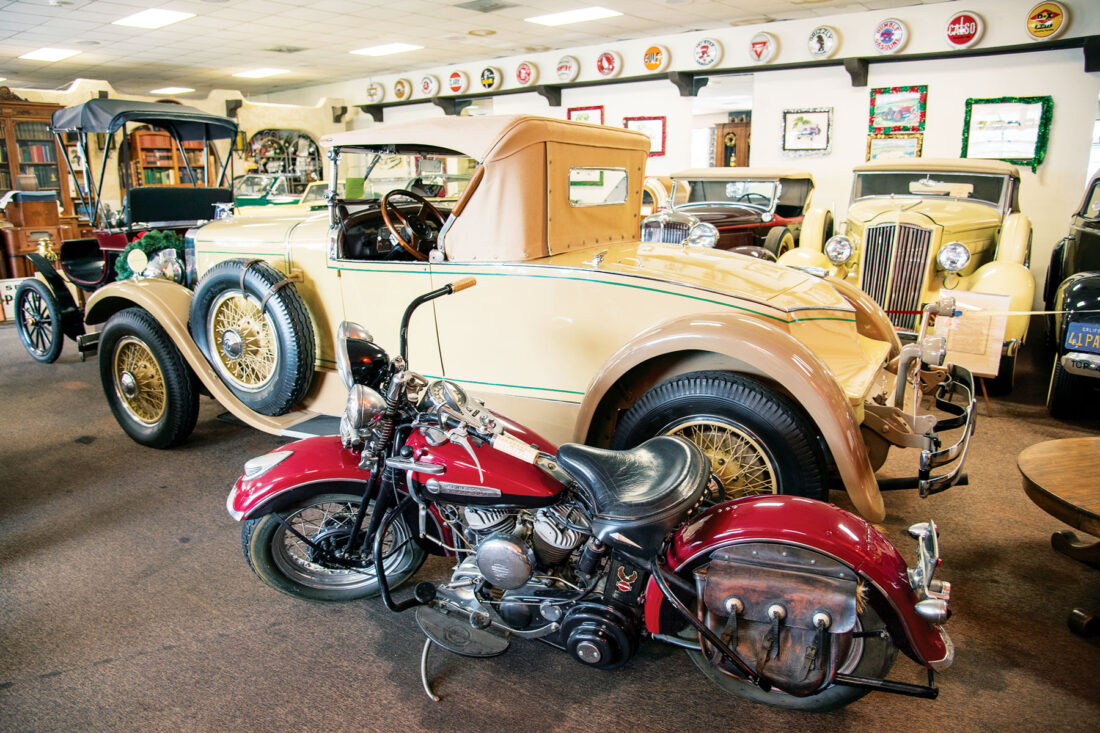
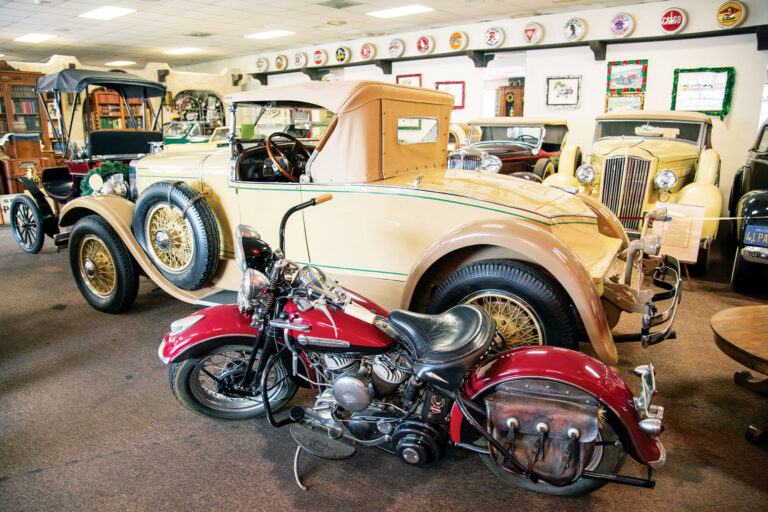
Upon entering the museum, I asked about the collection’s focus, and the answer was immediate: convertibles. Wow, is it ever! The museum claims to have the largest convertible collection in the world. The first building’s exhibits include a rare Franklin convertible (one of only seven in the world), a Chrysler woody convertible, and the museum’s vintage motorcycles. The museum has four motorcycles (1936, 1937, and 1947 Indians, and a 1947 Harley-Davidson). A path through the vineyard leads to the second display area. It is a long garage, with many convertibles parked side by side. These convertibles are mostly from the 1950s, 1960s, and 1970s. There are Lincolns, Imperials, Buicks, Fords, Chryslers, and many more.
What makes the exhibits especially interesting are fact sheets displayed near each car showing the price when new and how many were built. This second display area includes the vintage appliances and other artifacts mentioned above. Exiting the second display area, we then made the climb up the hill to the third and final display area. It, too, contains many examples of early Americana, several pristine convertibles, and a car I think is the museum’s most memorable: an absolutely stunning 1953 Cadillac convertible. It was recovered from a fire and rebuilt as a frame-up restoration with all new, hand-formed, hand-painted, and hand-rubbed body panels. The ’53 Caddy is mounted on a pedestal, and it alone is worth a trip to this hidden gem of a museum.
Robert Knapp, a San Diego entrepreneur, real estate magnate, and car collector, started the Deer Park Winery and Auto Museum in 1979. Knapp and his wife lived in San Diego and needed a place to keep their growing automobile collection. Rural Escondido fit the bill nicely. When Knapp passed away, stewardship of the vineyard and the museum passed to his son, and today, a third-generation Knapp family member is assuming the leadership role.
The grapes growing in the fields surrounding the exhibit halls are not just decorative; the Deer Park Winery is a working vineyard. An on-site store sells several varieties of wine, with an emphasis on reds and dinner wines. There’s a delightful small bar and outdoor eating area. The winery offers wine-tasting packages, along with cheeses and charcuterie selections. The reds are mostly made on site; other wines are produced by selected growers. This region in California’s north San Diego County is rich in wine-making tradition; before citrus became a dominant southern California crop, vineyards ruled the roost. For motorcyclists, the region’s 70-series California state roads (State Routes 74, 76, 78, and 79) are well-known motorcycle rides (I’ve been riding these roads for decades). It is a year-round motorcycling paradise, and it is some of the best riding in Southern California.