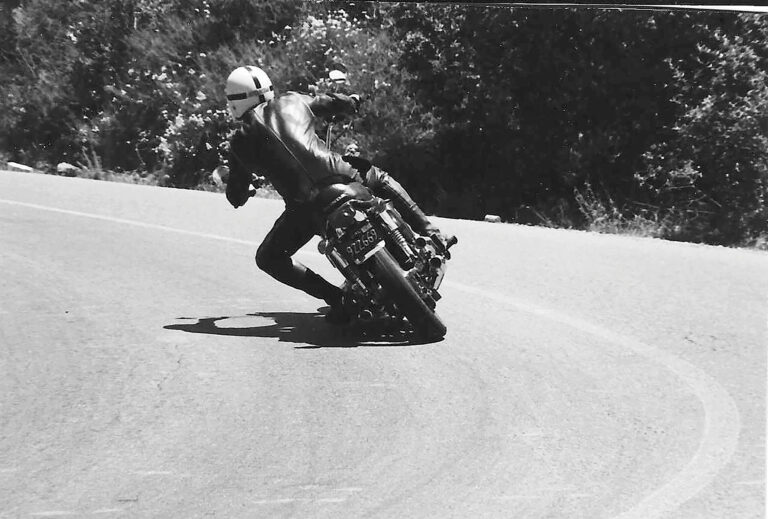
Most seasoned motorcyclists have favorite roads and highways they frequent, some simply for weekend rides. Perhaps the most notorious of those roads is U.S. 129 along the jagged Tennessee-North Carolina border. The route includes an 11-mile stretch where riders twist and shift their way through the 318 curves that prompted 129’s notorious nickname, “Tail of the Dragon!”
Other ride favorites include Blue Ridge Parkway, Natchez Trace Parkway, and further west, Texas Hill Country offers overlapping route variations for a unique variety. Elsewhere, a quick on-off of Interstate 15 in Utah offers 44 miles of scenic wonder known as the Nebo Loop. There are many more roads, such as California’s coastal Highway 1 (north and south of San Francisco), plus many other highways and byways in the Golden State. Among them is my sentimental favorite, State Route 74, with its steep canyon section that echoes the road’s adopted moniker, “Ortega Highway,” named for Sergeant Gaspar de Portola, Ortega, the explorer who, in 1769, became the first European to experience the steep and deep canyon that one day would support a well-used highway for cars and motorcycles.
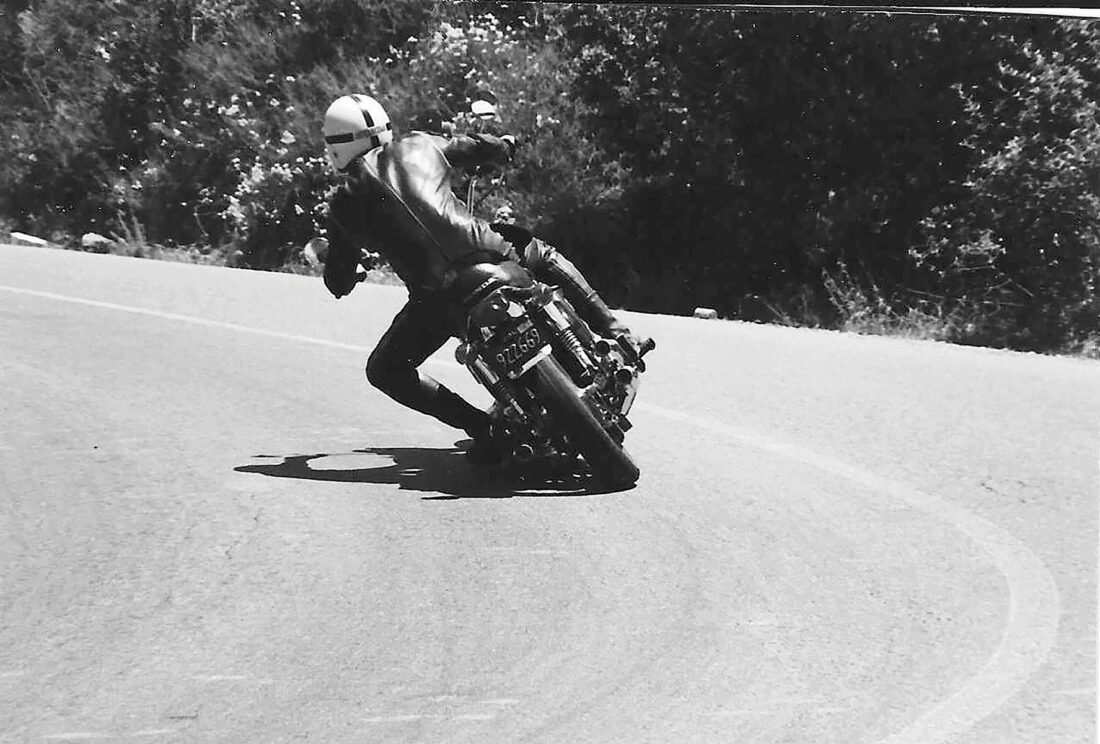
My introduction to “Ortega” (the highway) was in 1967 when brother Alan and I, riding new Honda Super Hawks, joined our friend John Lassak (Yamaha 305) for our introductory ride on California State Route 74. The road that day was practically void of cars and trucks, and we soon learned that wasn’t a rarity. We were instantly hooked and enjoyed the 33-mile ride from start to finish. It was pure bliss, although SR-74 actually stretched for more miles, today melding into the “Palms to Pines Highway,” the stretch of SR-74 that leads to Palm Springs’ back door.
By the summer of 1970, my two college roommates, Brad (Yamaha YR-1 350), Tom (Honda CB750 Four), and I (Honda CB350) were riding Ortega every Sunday morning. Alarm clocks blasted at 6 a.m., and within an hour, we were crossing the old concrete bridge heading east out of San Juan Capistrano and onto Ortega Highway. Our Sunday rides didn’t end until we rolled to a stop at the Lookout Roadhouse overlooking an impressive view of Lake Elsinore below. Technically, the ride ended at the stop for the “T” intersection near the lake itself. If there were more than three cars (heading in either direction) during those Sunday morning rides, we deemed the highway as being “crowded.”
The following summer, I began my career in the motorcycle magazine business, and I often relied on Ortega for road testing various new-model motorcycles. That included photography; over the years, other journalists followed suit, and Ortega became an extension of our work quarters.
Since then, Ortega has greatly changed, due in large part to an ongoing reconstruction project that technically “improves” the road by removing numerous blind spots at strategic curves, widening the lanes from 11 feet to 12 feet wide, lining road shoulders with (sadly) view-blocking cement K-rail guardrails, and resurfaced pavement. More than $49 million was spent on the project that quickens the pace for cars and trucks, but slows a motorcycle’s pace due to increased traffic. I realize the need for progress, but it saddens me to lose an old friend. I guess that’s why we have photographs and memories.