Photography is a wonderful thing. Along with detailed technical information, manufacturing histories, and owners’ commentary, the photographs that capture the character and unique details of each motorcycle, both in our pages and on our website, are at the heart of what Motorcycle Classics is all about.
However, there are many occasions in which we learn of a motorcycle suitable for the magazine, but lack the connection with a professional photographer in that area to go to the machine and capture its line, its form, and its color, and get those images back to us so we can share them with thousands of readers.
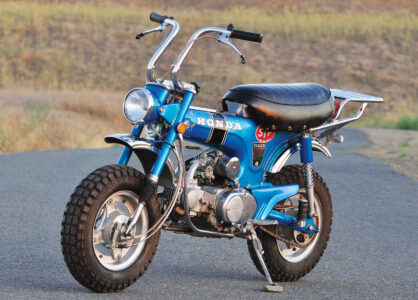
If you know of a professional photographer in your area with the skills to photograph motorcycles to our specifications, please have them contact me. Before I go further, however, there’s that word — professional. Since the development of the smartphone, nearly all of us can take a photo, save it, share it, and even publish it. But our needs as a visuals-focused magazine publisher are different in several ways. When you study the photos we have used in a dozen or so Motorcycle Classics features from past issues, you will see a pattern. Photo backgrounds are free of distractions and work with the motorcycle’s colors. Lighting is key, so positioning the bike is critical; the use of natural light, its source direction, makes or breaks the information a photo can offer. The left- and right-side images, most three-quarter views, are shot from crankshaft level. The gauge cluster, controls, carburetors, magnetos, hubs, and backing plates are shot to display their mechanisms and forms in such a way as to be helpful to a person restoring a similar bike, maybe even a concours judge. Our photos are selected to illustrate motorcycles not so much in a sexy way as in an informative way; the photos support the text and vice versa.
And I am reminded that not every photograph in its original raw form is what the photographer set out to achieve. A professional uses the editing process to adjust color, contrast, and perhaps to fix an unforeseen problem with the background or a scratch or nick in the bike’s finish, or even to erase some rust.
If you are a professional photographer or know of a pro who would like to visit a motorcycle in his or her area and capture it in high-resolution photography, please reach out to us at Editor@MotorcycleClassics.com