The Skinny
- What: Sacramento, California.
- How to Get There: From the east or west, it’s I-80. From the north or south, it’s I-5.
- Best Kept Secret: Old Sacramento at night. Any of the restaurants are awesome.
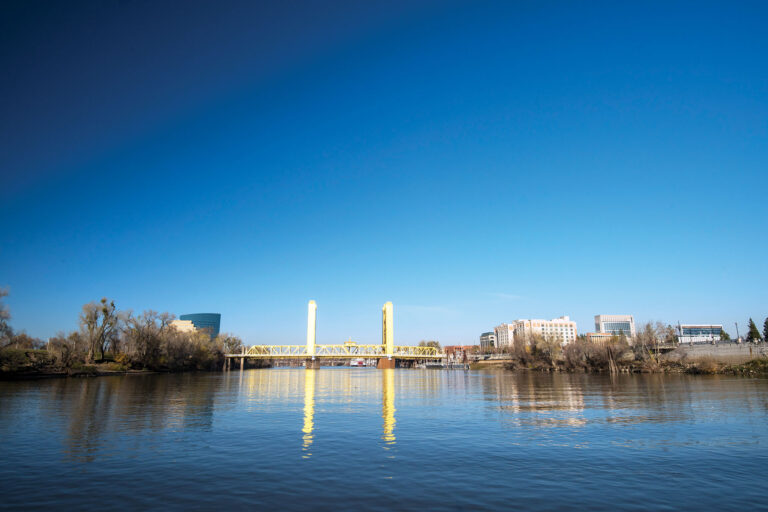
- Don’t Miss: The river cruise along the Sacramento River.
- Avoid: Doing Arnold Schwarzenegger impressions in the State Capitol Museum (don’t ask me how I know).
- More Info: Capitol Museum website
- More Photos: bit.ly/cal-rail
Sacramento, a great destination and the sunniest city in the world, has a rich heritage, impressive attractions and generally outstanding weather. Located where the American and Sacramento Rivers meet, Sacramento has played key roles in both U.S. and California history. For thousands of years before the Spanish entered California, indigenous peoples (Nisenan, Modoc, and Plains Miwok Native Americans) populated this fertile area. The Spanish influence began with Gabriel Moraga’s 1808 expedition, with Moraga christening the river Río del Santísimo Sacramento. In 1839, Juan Bautista Alvarado (the Mexican governor of Alta California) tasked Swiss-born Mexican John Sutter with colonizing the region. He established Sutter’s Fort (soon to play a key part in the California Gold Rush). The United States acquired California with the 1848 Treaty of Guadalupe-Hidalgo. James Marshall discovered gold at Sutter’s Mill about 50 miles northeast of Sacramento in 1848, and the Gold Rush began. Thousands of people entered the region hoping to make their fortune. John Sutter, Jr., son of the Sutter mentioned above, developed plans for and started what would ultimately become Sacramento as we know it today. Sacramento adopted a city charter in 1849 and the area became the City of Sacramento in 1850 (it is the oldest incorporated city in California). Strategically situated at the junction of the American and Sacramento Rivers, and with an accessible location close the Sierra Nevada’s Mother Lode, Sacramento’s growth was explosive. Sacramento became California’s capital in 1879.
There’s a rich history in Sacramento and much to see and do based on that history. Sacramento was the western terminus of the short-lived but famous Pony Express. Sacramento was also the western end of the Transcontinental Railroad (see Golden Spike National Historic Park, Motorcycle Classics, June/July 2019). You might wonder why as Sacramento is considerably inland, but the city has a deep-water port and access to the Pacific through San Francisco Bay and the Sacramento River.

Sacramento has done a good job preserving much of its past; today, Old Sacramento is a 28-acre waterfront area with an old west feel along the Sacramento River. Yes, it’s a bit touristy, but it’s fun. There’s shopping, wonderful restaurants, and the California State Railroad Museum. The Railroad Museum is awesome (there are 45 steam locomotives built before 1880 still in existence in the United States; the California State Railroad Museum has eight of them). Another great Sacramento destination is the California State Capitol, a place that houses both of California’s legislative chambers, the governor’s office, and a marvelous museum featuring California history. A former actor-turned-governor (we’ve had two of them here in the Golden State, you know) made a few waves here and the tributes to Governor (later President) Ronald Reagan are many. The Railroad Museum, Old Sacramento and the Capitol are all within walking distance of each other.
About that sunniest city in the world designation, it’s real. Sacramento is noted as being the sunniest place in the world for the months of May through August by the folks who make such ratings, and for those of us who ride, that is a good thing. The roads and the riding are awesome in and around Sacramento. Several major highways pass directly through Sacramento, and many great rides make this a great place to visit. I-5 is the major north-south road through town, and I-80 is a similar east-west freeway. Highway 50, the Loneliest Road in America starts in Sacramento and goes all the way to the Atlantic Ocean (follow it east and it will take you to the Sierra Nevadas, Lake Tahoe, across Nevada, and ultimately, Ocean City, Maryland). In and around Sacramento, you can ride along the Sacramento River on the Old River Road on the west side or the Garden Highway on the eastern side. Trust me on this: It’s hard to go wrong on any ride in any direction into or out of Sacramento.