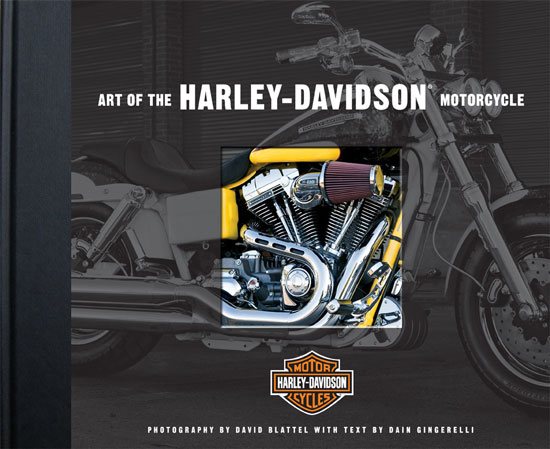

Historical and technical profiles written by Harley-Davidson expert Dain Gingerelli and masterful motorcycle photography by David Blattel come together in Art of the Harley-Davidson Motorcycle (Motorbooks, 2011). The result is a breathtaking review of over 100 stunning Harley-Davidson greatest hits from the early 1900s to today. The following excerpt is taken from Chapter 1, “Finding Form: The Early Harley Motorcycles.”
The story has been told time and again during the past 100 or so years about the small wooden shed where three young men–William S. Harley, Arthur Davidson and his brother Walter–created the first Harley-Davidson motorcycle. Things were quite different in terms of forming a new business back in 1903, and without interference from governmental regulatory bodies and environmental agencies to shackle their progress, the four men from Milwaukee, Wisconsin, set out to build a business empire that became known as the Harley-Davidson Motor Company.
But even without the hindrance of labor laws and bureaucratic red tape, the going wasn’t easy for any of the early motorcycle builders because they all worked from a clean slate. There was little background to draw from, so those early pioneers of the motorcycle industry blazed their own trails, often learning about motorcycle design as they went. There were no demographics to speak of, either, so they developed their motorcycles based on intuition and what they felt would work best. Some of those early motorcycles were resounding successes, others dismal failures.
Despite the obvious growing pains, those trailblazers had one thing in common: they all shared a passion for progress. And that’s probably the underlying key to why the motorcycle industry didn’t fail more than a century ago and why it continues to flourish to this day.
Early examples of Harley-Davidson innovation from Art of the Harley-Davidson Motorcycle:
• Harley-Davidson 1915 Model 11-F
• Harley-Davidson 1933 Model VLD
• Harley-Davidson 1940 Model UL
• Harley-Davidson 1946 Model EL
• Harley-Davidson 1964 Model FL
• Harley-Davidson 1966 FLH Electra-Glide
This excerpt has been reprinted with permission from Art of the Harley-Davidson Motorcycle, published by Motorbooks, 2011.