1975 Moto Morini 3½
- Engine: 344cc air-cooled four-stroke, OHV, two valves per cylinder, belt-operated cam/pushrods, wet sump, 72-degree V-twin, 62mm x 57mm, 42bhp @ 8500rpm for the Sport (factory claim), 11.0:1 compression ratio
- Top speed: 100mph (period test)
- Carburetion: two 25mm Dell’Orto carburetors
- Ignition: Battery and coil, 12-volt, CDI ignition, alternator
- Transmission: 6-speed, right foot shift
- Clutch: dry, multiplate, chain final drive
- Frame/wheelbase: tubular double cradle, swingarm rear, 54.7in wheelbase
- Suspension: Marzzochi 35mm telescopic fork, dual shocks
- Brakes: Grimeca double-sided single leading shoe drum, 9.06 diameter x 1.18 width, single leading shoe drum brake, 7.09in x 1.38in
- Tires: 3.25 x 18 front, 4.10 x 18 rear
- Fuel capacity: 3.7gal, 51mpg
- Seat height: 30in
- Weight: 352.7lb (with full tank of gas)
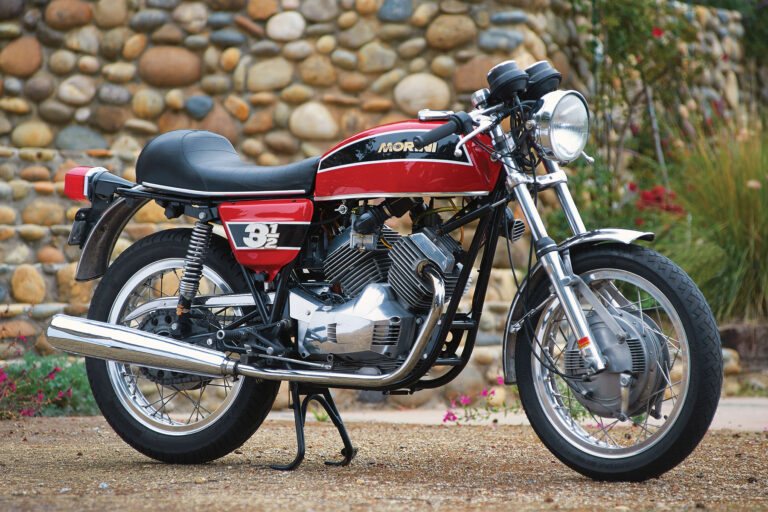
Barry Ferris’ 1975 Moto Morini was the first 3½ I had seen in a very long time, which is not surprising — not many were imported to the U.S. back when they were new. Ferris is not sure how many of these peppy little motorcycles were ever sold in the United States, and survivors in good shape are quite rare on this side of the Atlantic.
Moto Morinis from the 1970s and early 1980s are much more common in England and Europe, where the bike has cult status and many people still ride them on a regular basis. The 344cc 3½ is light, handles well, is fast for its displacement, and, like most Italian vehicles, is easy on the eyes. Unlike some Italian vehicles, owner consensus is that a Moto Morini is reliable if the maintenance is kept up.
After the dust settled
The Morini factory got its start in the 1920s, when Alfonso Morini, a skilled mechanic, joined forces with Mario Mazzetti to build MM motorcycles. The joint effort produced some excellent race bikes, and Morini (who was as good on a track as he was with wrenches) achieved some impressive results racing them. In 1937, Morini left MM and started his own line of three-wheeled commercial vehicles, which were an economical and practical way to get bulky goods through narrow, crowded streets in Italian cities. The factory was pressed into war production by the Mussolini government, and, predictably, bombed. After WWII was over, Morini rebuilt and started building small two-strokes to meet the postwar demand for personal transportation.
At the time, it was expected that an Italian motorcycle factory would field a race team, much as it was expected that il proprietario would drink good wine and wear designer suits, so Morini hired promising youngsters to campaign his small-displacement racers. Well-known postwar racer Umberto Masetti started out on Moto Morinis, and so did GP champion Giacomo Agostini. Success on the track translated to success in sales, and Moto Morini prospered.
Alfonso Morini died in 1969, and his daughter Gabriella took over. She hired good help: general manager Gianni Marchetti and engineer Franco Lambertini. The two came up with a 344cc four-stroke V-twin. This was Moto Morini’s first multi-cylinder machine. A prototype was shown at the 1971 Milan Motorcycle Show, and 50 bikes were produced in 1972. The Moto Morini 3½ went into full production in 1973 and was exported beginning in 1974.
Modern for its moment
The 3½ displayed purposeful use of advanced design. The engine featured Heron heads, with the squish areas built into the pistons, not the combustion chamber. This configuration was simpler (and therefore cheaper) to cast and machine and had been proven on period race cars, although Moto Morini claims to be the first motorcycle manufacturer to use this cylinder design. Period magazines approved of Lambertini’s top-end configuration, which both boosted horsepower and produced good gas mileage. Following the offset of the crankshaft throws, the cylinder heads were offset to allow the rear cylinder to be better air-cooled. The overhead valves were driven via short pushrods by a high placed camshaft driven off the crankshaft by a short Gilmer belt. The alternator was vented, but also fan-cooled. Both Dell’Orto carburetors were positioned between the cylinder heads and connected to individual filters under the 3.5-gallon gas tank.
Other innovative features included capacitive discharge (electronic) ignition instead of the then widely used points, an electronically operated front petcock, a hydraulic fork, and a six-speed gearbox.
The Moto Morini 3½ came in two versions: the Strada, with a comfortable seat and touring handlebars, and the Sport, with a bump pad seat, clip-on handlebars, a more highly tuned engine, and fire red paint. Testers in the U.S. and U.K. liked both versions of the bike, but not the price tag, which was considerably more than comparable Japanese motorcycles. They praised the punchy motor and the excellent handling. “Sets the blood racing,” said Bike magazine, a British rag that was known to be stingy with praise.
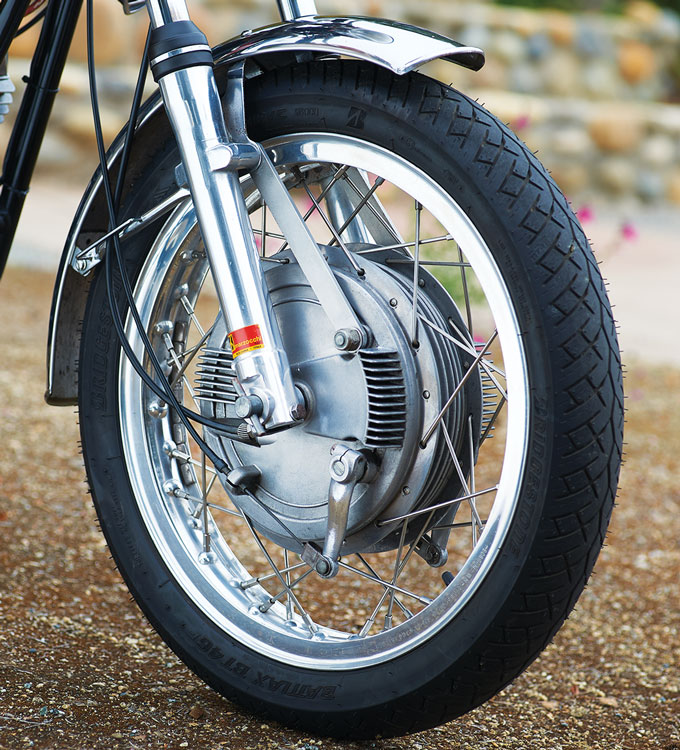
Although a 500cc version appeared in 1981, Moto Morini continued to build the 3½ until 1987, when Gabriella Morini sold the firm to Cagiva. The 3½ engine’s lower end was upgraded in 1975. The double leading shoe Grimeca brake was replaced by one, and then two front discs, and an electric starter was added in 1978.
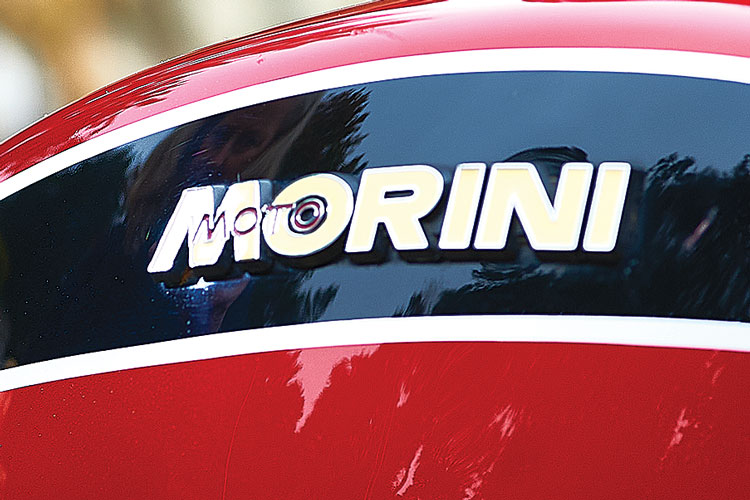
Cagiva let the company decline, although a few new bikes were built. A new company bought the trademarks in 1999, and efforts were made to sell 1200cc sportbikes. This did not go well, and the new effort ended in bankruptcy. Another new company restarted production, and they, in turn, were bought by a China-based vehicle manufacturer in 2018. At present, Moto Morinis are designed and tested in Italy and built in China. There are a few U.S. dealers for the new bikes, which have received positive reviews.
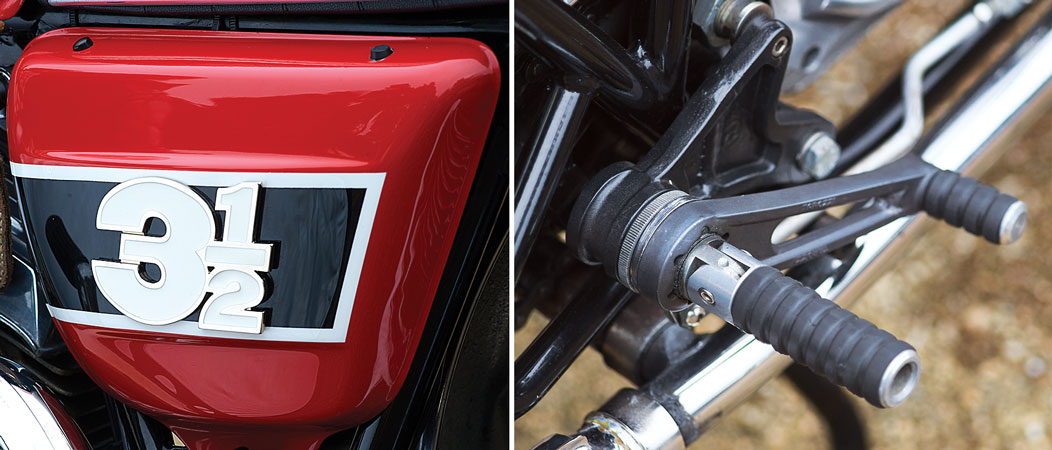
Although Moto Morinis have always been a rarity in the U.S., the Moto Morinis of the 1970s acquired a cult following on the other side of the Atlantic, and there are clubs all over Europe. The 3½, while popular, has not appreciated like some other bikes of this period, leading Classic Bike, an English publication, to call it an “excellent buy” and a “genuine bargain.” The popularity of the Morini in England and Europe has also led to good quality, newly made parts often made available. The British Moto Morini club is going strong, with local meetings all over the United Kingdom and five different shops in different parts of the U.K. that will work on Morinis and provide parts for owners.
Pieces of a puzzle
Barry Ferris likes Italian motorcycles and has a small collection of vintage bikes and a modern Moto Guzzi. In 2004 or 2005, he had time on his hands and was looking for a project. “Someone mentioned Moto Morini.” He started a search and happened on a mostly original Sport that had been raced at some point. There was an engine, two frames, and a lot of boxes of parts, including three exhaust systems. Apparently, the owner had dismantled the motorcycle, had the frame and the tank repainted, and given up. Ferris, a man who likes a challenge, bought the collection of parts.
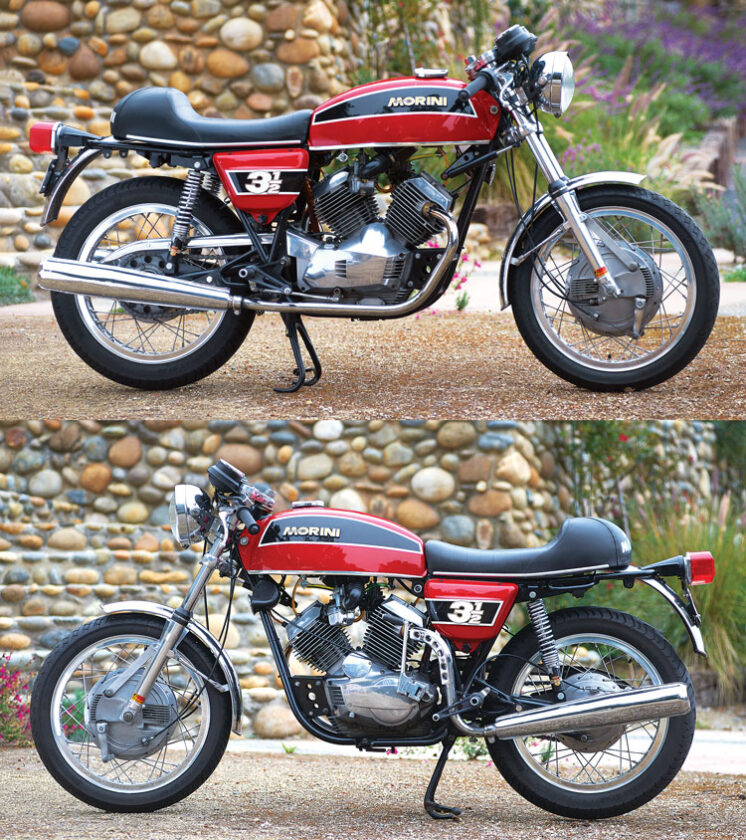
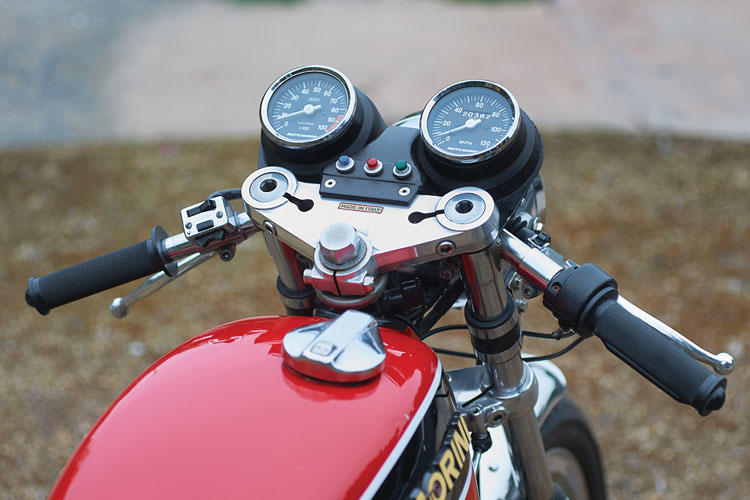
Ferris carried the boxes into his garage and sorted through his new project. He was pleased to find that almost everything he needed to build a 1975 Moto Morini Sport was there, including the hard-to-find items, such as Borrani rims in good shape, the massive Grimeca front brake, the control cable guides, and the right-year Veglia instruments. In many cases, a person who buys a basket case will find parts missing and parts from a completely different machine included. Ferris was lucky: He found very few parts for Hondas or lawnmowers in his boxes. The race effort had used one of the two frames, which had originally come from a Strada. The other, which was made for a Sport, was untouched. Most owners replace the stock pegs on the Sport model with Tarozzi rear sets, which are much more comfortable for taller people, and the rear sets were in one of the boxes.
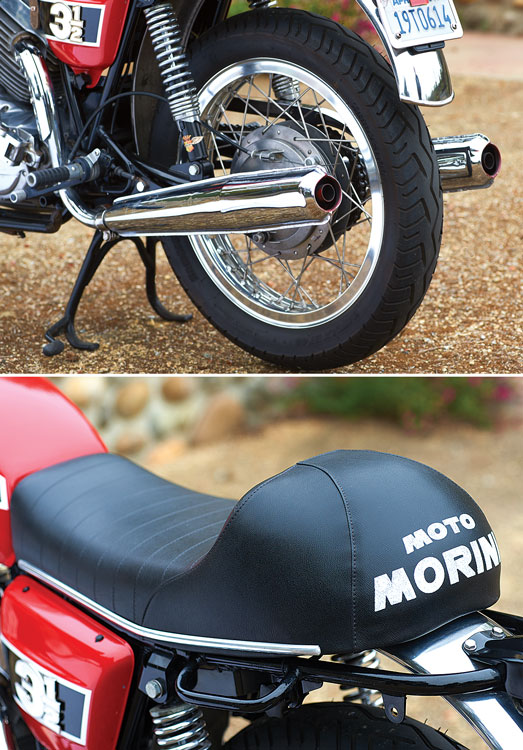
Almost everything was usable with some refurbishing, and Ferris bought a tabletop bead blasting cabinet to clean up the metal parts and set about cleaning, painting and plating, and then reassembly. The Dell’Orto carburetors are common to several different Italian motorcycles. Rebuild kits and most other parts are easily located, so one of the first jobs was to get two rebuild kits and rebuild the carburetors. Ferris opted to use the Euro spec carburetor jetting, which helps avoid a common off-throttle stumble due to leanness and fuel formulations in America.
Several items needed repair, including the clutch basket. The clutch basket fingers that locate the clutch plates were damaged and had to be welded and dressed. Ferris sent the head out to be machined and had the valves ground. He rebuilt the Koni shocks himself. The cams that came with the bike are 2 + 2 racing cams, which Ferris decided to use.
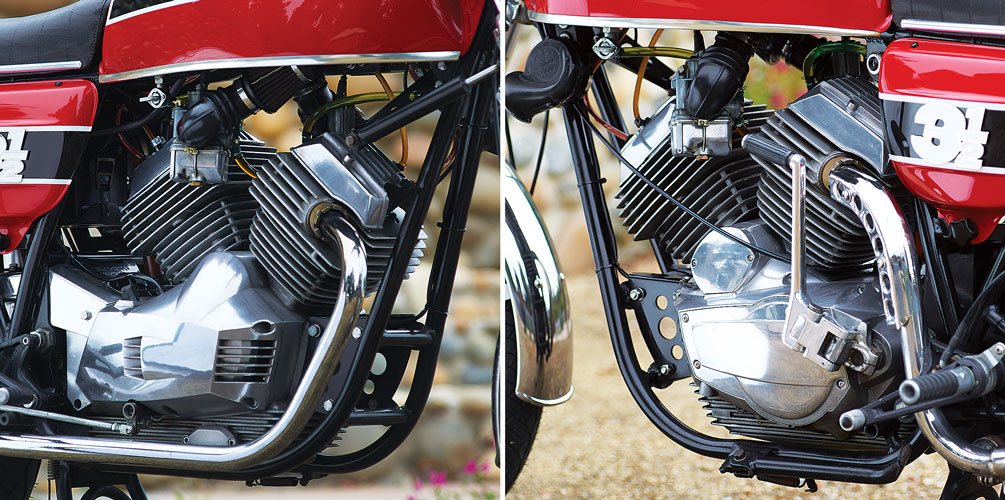
Once the bike was all together, some other problems surfaced. The alternator stator had lost much of its magnetism, which led to a low battery and hard starting. Older Vespas have a similar problem, and the San Diego Vespa dealer, who offers a remagnetizing service, agreed to work on the Morini’s stator. “Now the battery stays up, and it starts great!” The original front petcock was operated by a solenoid, a nifty bit of technology that would turn the petcock on when the rider turned on the key. Unfortunately, the petcock leaked, and valiant efforts to convince it to stop leaking all failed. In the interest of safety, Ferris had to replace the petcock with a manual, non-leaking unit.
The kickstart ritual
Like most kickstart-only motorcycles, there is a starting ritual. “I like the rituals associated with older bikes,” says Ferris. “It’s like comfort food.” The first item is to find the ignition switch, which hides under the left side of the fuel tank. Once located, turning the key on also turns on the gas for the front petcock (assuming the stock solenoid design is installed). The rear petcock is a typical manual design, so open that petcock. The fuel takes a little bit of time to percolate through the system, so put on your riding gear while waiting for fuel to get where it needs to go. Turn the key off and kick through twice. If the air temperature is below 70 degrees, engage one choke. Get the kickstarter up on compression, crack the throttle a little, and it should start first kick. Ferris adds, “If it’s really cold, like below 50 degrees, I bump start it down the hill I live on.”
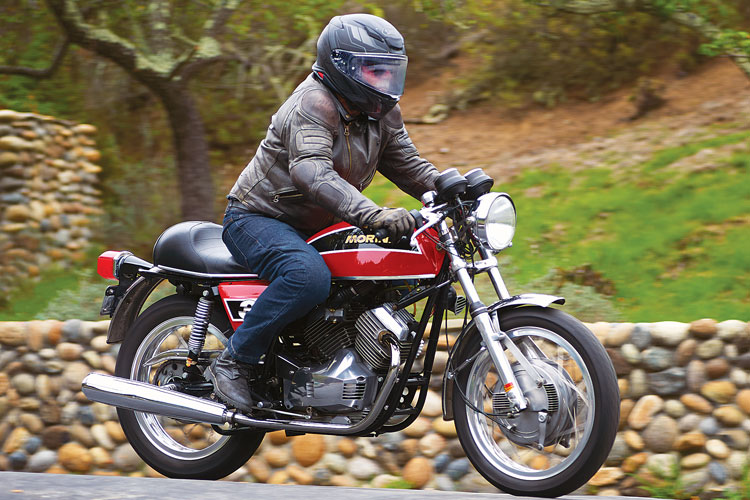
Morini maintenance is reasonably straightforward. Ferris suggests changing the oil every year, using typical 10w30 motor oil. He also suggests checking the plugs at the same time. “If there are no problems with the carburetors, leave them alone! Put Seafoam (a fuel additive that is claimed to stabilize fuel and provide other benefits) in the tank every so often.” Other suggestions are to oil the chain and lube the cables, and keep an eye on the electronics. “1970s Italian switchgear is notoriously flaky,” he says. Lastly, check the tires. Morini wheels should be shod with good modern rubber; keep an eye out for wear. Morinis are at their best when snaking through fun twisty roads, and the tires need to keep up with the rest of the bike. Cam belts are cheap, easy to install, and should be replaced at five years or 5,000 miles. A broken cam belt can damage pushrods, generally not valves or the heads.
Flickable and fun
Period testers were unanimously enthusiastic about the handling of this small, light, and revvy machine, and classic bike test riders agree. “Stability was excellent at all speeds, and the sweet-steering Morini went round corners effortlessly, aided by suspension that was well-damped without the traditional Italian harshness,” said Roland Brown for Hagerty U.K. “The brilliant handling is in a class all of its own — only matched by my Norton Featherbed!” said the owner of a bike tested by Classic Bike Guide in England. The test rider of this bike was impressed: “Light, well-balanced, and rapid, this little motorcycle flies and sings like no other I’ve ever had the good fortune and pleasure to ride.”
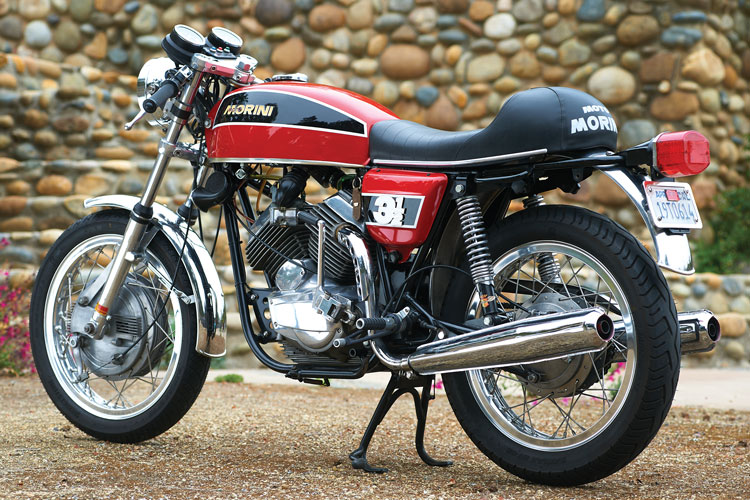
Barry Ferris adds to the chorus. “The Morini is a lot of fun to ride. It’s small, light, agile, and flickable. It has a very torquey engine and a six-speed box to keep it on the powerband. It’s difficult to overrev this bike — it will rev over the 8500rpm redline, but that doesn’t do much good since the power curve flattens out as you approach redline.”
“It’s one of my favorite bikes to ride,” he says. “I have a 40-mile loop on the roads near my house that I like. On the Morini, I get in the riding zone easily. It’s just a delight to ride on the loop on a sunny afternoon.” MC