For its 20th running in 2025, the Barber Vintage Festival once again proved why it stands alone as America’s premier celebration of classic motorcycling. During the first weekend in October, Leeds, Alabama, became the gravitational center of the vintage world, drawing tens of thousands of riders, collectors, racers, and enthusiasts to Barber Motorsports Park, an 880-acre playground built around motorcycles and the people who love them.
It’s a festival so rich, varied, and finely executed that describing it never gets easier. Each year somehow manages to eclipse the last, setting new standards for what a vintage event can be. From early morning into the evening, there’s something happening in every corner: road racing, motocross, flat track, a sprawling swap meet, demo rides, seminars, the Fan Zone, and the shimmering glass-and-steel cathedral that is the Barber Vintage Motorsports Museum. It’s an event that satisfies every kind of rider from the tinkerer to the historian, racer to the dreamer.
The beating heart
The Barber Museum sits at the heart of it all. Home to a collection of 1,800 motorcycles, the museum displays over 1,000 motorcycles across five gleaming floors. The perfect light, immaculate presentation, and a sense of reverence for design and engineering never gets old, even for regulars. For first-timers, the entire history of motorcycling compressed into one breathtaking structure can be overwhelming.
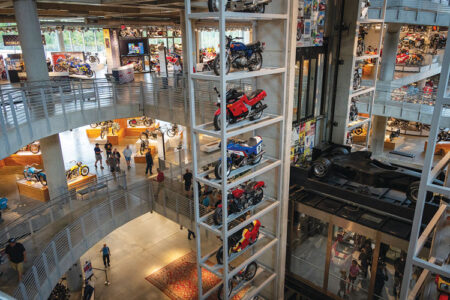
Over the festival weekend, more than 3,000 visitors passed through museum doors to attend seminars, film screenings, and interviews on the ground floor. The museum continues to evolve, not just in scope but in mission. A new Conservation Manager position, filled by preservation specialist Ally Domar, reflects a shift in approach from restoration toward conservation and thereby preservation. Rather than returning every machine to showroom newness, the goal is to maintain authenticity, preserving the wear, patina, and history that make each motorcycle a living artifact.
Dr. Liz Johnson, who oversees the museum’s educational programs, continues to expand outreach to younger visitors, ensuring that Barber’s legacy extends beyond the current generation. More than simply addressing mechanical history, the museum’s programs strive to stimulate curiosity and help students understand how these machines came to be and why they still matter.
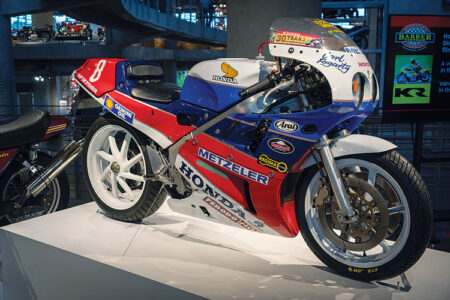
Among the newest additions to the museum’s collection are two remarkable Honda RC30s once raced by Carl Fogarty. His 1989 VFR750R RC30, winner of the Isle of Man Production 750 TT, and a 1988 RC30 now sit proudly on display, still wearing their scuffed bodywork, scrutineering stickers, and faded sponsor decals. They are displayed exactly as they last came off the track.
Honoring Eraldo Ferracci
Each year, the Barber Festival honors an individual who has left an indelible mark on motorcycling. For 2025, that distinction went to Eraldo Ferracci — racer, tuner, team owner, and founder of Fast by Ferracci (FBF).
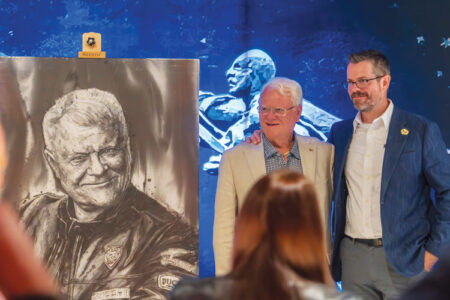
Ferracci began racing in Italy, winning the national 125cc championship in 1963 aboard a Motobi. In the late 1960s, he moved to the United States to promote Benelli, and by 1980, he had launched Fast by Ferracci, a Philadelphia-based shop that became synonymous with speed and success. Initially building drag racers, Ferracci soon turned his attention to AMA Superbike, and later to the World Superbike Championship, where he achieved back-to-back titles in 1991 and 1992 with Doug Polen aboard Ducati machinery.
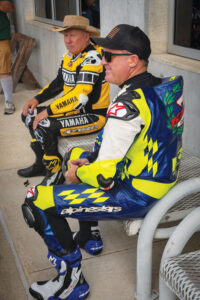
Throughout the 1990s, FBF-tuned Ducatis dominated American racing. Freddie Spencer took his final AMA road-race win on one, and Larry Pegram and Jamie James, both present at Barber this year, carried the Ferracci name with pride. Known for his meticulous attention to detail, his mentorship of riders, and his relentless pursuit of performance, Ferracci remains a revered figure in the racing world.
During the Motorcycles by Moonlight benefit dinner on Friday evening, Ferracci was honored with heartfelt tributes from Cook Neilson, Kevin Schwantz, Larry Pegram, and Kevin Cameron. The event raised vital funds for the museum.
Legends on the grounds
The 2025 festival gathered an extraordinary lineup of racing royalty. “King” Kenny Roberts and his son Kenny Roberts Jr., both World Champions, returned to Barber, where their legacy machines and memorabilia now reside on permanent display. The father-son duo treated fans to spirited parade laps, Kenny Sr. aboard his Yamaha YZR500 two-stroke GP racer, Kenny Jr. on a Team KR Proton KR211V MotoGP four-stroke. Hearing those engines echo through the Alabama hills was a reminder that history is best experienced at full throttle.
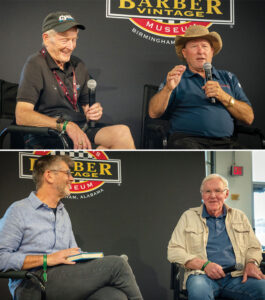
Other notable figures included David Aldana, who, at 76, still races and remains one of the sport’s enduring characters, and 1993 World Champion Kevin Schwantz, who signed autographs and swapped stories with fans.
Writer and raconteur Peter Egan held court with tales from his new book, Landings in America, chronicling a 1987 cross-country flight in a 1945 Piper Cub with his wife. Elsewhere, technical sage Kevin Cameron sat down with Kenny Roberts Jr. to discuss Suzuki’s racing development, while Cook Neilson interviewed both Kenny Sr. and Eraldo Ferracci, drawing laughter, insight, and nostalgia in equal measure.
Racing, exhibits, and everything in between
The festival’s scope is staggering. The American Historic Racing Motorcycle Association (AHRMA) provided vintage racing, which filled the circuit with constant action. Spectators wandered freely through the paddock, chatting with riders and mechanics, studying machines up close, and soaking in the distinctive blend of castor oil, rubber, and adrenaline.
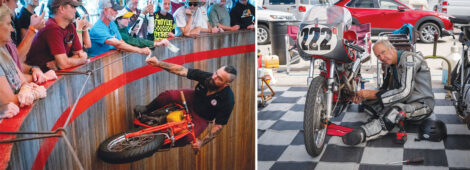
Across from the museum, the vintage motocross course kept engines barking and dirt flying, while over at the swap meet, nearly 400 vendors offered everything from carburetors to complete restorations. Bargaining was half the fun; the other half was spotting rare parts you didn’t know you needed.
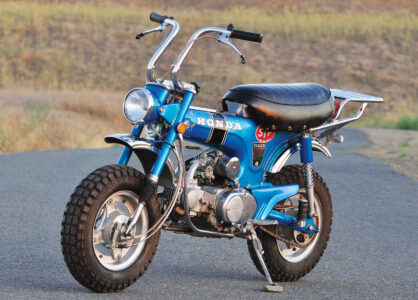
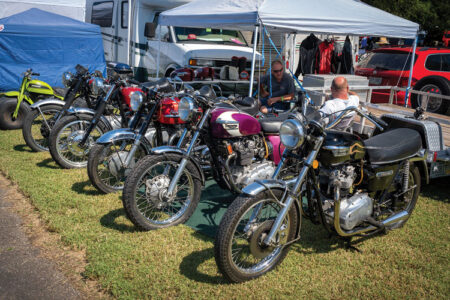
The Vintage Japanese Motorcycle Club held its annual show in front of the museum, showcasing pristine Hondas, Yamahas, Kawasakis, and Suzukis, even Tohatsus — proof that Japanese classics now stand shoulder-to-shoulder with the British and European machines that once defined “vintage.”
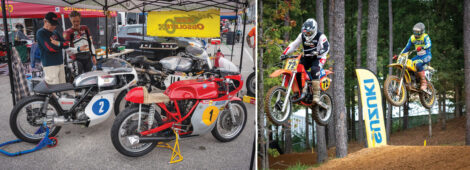
Meanwhile, the Fan Zone, sponsored once again by BMW Motorrad, buzzed with activity. Food trucks, live music, gear vendors, and the American Motor Drome Wall of Death kept crowds entertained. The Motorcycle Classics tent drew a steady stream of readers eager for magazine subscriptions, shirts, and good conversation. A short tram ride away, Triumph Motorcycles hosted the “Isle of Triumph,” featuring a dedicated bike show, vendors, and live bands with perfect trackside views of Turn 6.
Fast by Ferracci on parade
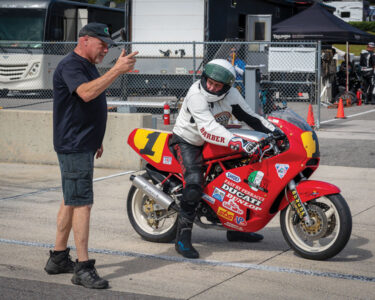
Museum Executive Director Brian Case has been instrumental in strengthening ties between the Barber Museum and AHRMA, ensuring the partnership benefits both racing fans and the museum’s mission. This year, he arranged for star riders, including Larry Pegram, Jamie James, and Chuck Huneycutt, to take spirited parade laps aboard Ferracci-built Ducatis from the museum’s collection. The sight and sound of those red Superbikes under veteran hands was unforgettable.
Case has also deepened the museum’s connection to innovation. Through the Barber Advanced Design Center (BADC), he champions new technologies and educational outreach. During the festival, museum board member Ultan Guilfoyle joined famed designer Pierre Terblanche for an engaging talk on the interplay of styling, design and engineering, spotlighting the genius of Paolo Martin and Lino Tonti — names that resonate deeply with classic enthusiasts.
The local Motus connection
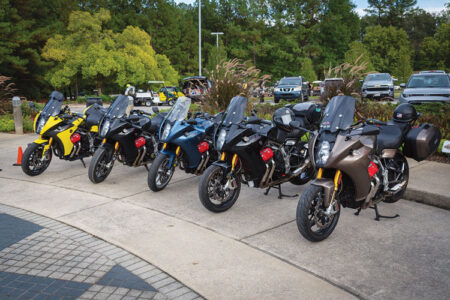
Few realize that the Motus sport-touring motorcycle was born just miles from Barber’s gates. Designed by Brian Case himself, the Birmingham-built machine featured a bespoke 1,650cc liquid-cooled V4 producing up to 180 horsepower. A total of 200 were made between 2015 and 2018, and both the first and last examples now reside in the Barber Museum. During the festival, a small Motus reunion gathered five bikes in front of the museum, where Case met with owners, swapped stories, and joined a group photo that radiated pride.
A celebration without equal
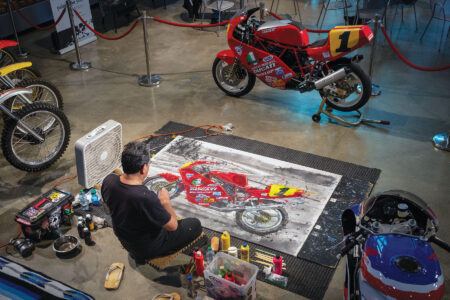
Adding to the weekend’s artistry, Makoto Endo returned with his bamboo chopsticks and ink, painting live on the museum’s second floor. Visitors watched as images of roaring Superbikes emerged from sweeping black strokes. His portrait of Ferracci, unveiled at the Motorcycles by Moonlight dinner, captured the Grand Marshal’s intensity in vivid style.
There’s an almost impossible abundance to Barber. So much happens on Friday and Saturday that even the most ambitious visitor can’t see it all. But that’s part of its charm; no matter how much you take in, there’s always more waiting around the next corner, another engine to hear, another conversation to strike up.
Much of what the Barber Festival has become can be traced back to Brian Slark, the museum’s Curator Emeritus and one of its founding figures. It was Slark who, two decades ago, first imagined turning the museum’s grounds into a festival. “We had everything here,” he recalled. “A track, a museum, open space, and the kind of people who would appreciate all of it. I thought, why not bring them together?”
What began as an inspired idea has grown into a world-class event, yet it retains its human touch. Slark still attends the event each year, watching the crowds with quiet satisfaction. “It’s the faces that stay with you,” he said. “Everyone’s smiling, relaxed, amazed. Surrounded by bikes and like-minded people, it’s hard not to be happy.”
He paused, considering the festival’s future. “Every year, I ask myself how we can make it better,” he added. “And somehow, we do.”
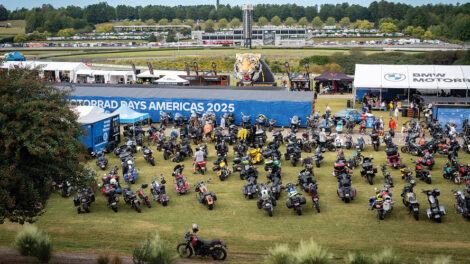
The Barber Vintage Festival remains what it has always been: a great, gleaming celebration of the motorcycle in all its forms. It’s a long weekend that feeds every appetite, whether for racing, restoration, or simple appreciation. Each October, Barber reminds us that the love of motorcycles isn’t just about machines. It’s about people, places, and the stories that connect them.
The 21st Barber Vintage Festival is already set for October 9-11, 2026. If 2025 is any indication, you’d be wise to mark your calendar now. Barber delivers an experience that grows bigger, better, and more inspiring every year. MC